HOW TO POSTS: LIGHTING AND COMPOSITION
digital photography definitions
Glossary of digital photography terminology

Here is the dictionary of photography definitions you need to understand in order to improve your photography.
There are a lot of definitions here. You can scroll down or use one of the shortcuts below to get to a section faster. This photography dictionary is yours to use any time you have a question about digital cameras.
Shortcuts to photography Definitions By The Letter:
Yes, it can be confusing. There are a ton of digital photography definitions used on websites, in photography books, and in digital camera manuals. You try to get through an explanation of a concept and a photography term gets in the way.
These definitions are simplified so that you can get a better grasp of their meaning.

It's easy to find the answers. The terms on this page are in alphabetical order.
Or, use the search box to quickly find a useful article on this site to find your answer.
Search for a new topic on this site:
You can find photography terms for beginners and digital photography vocabulary about advanced techniques too. If there is something missing on this photography word list, you can let me know here.
Photography Definitions - the Letter A
ABERRATION
 Chromatic Aberration
An aberration is an imperfection in an image caused by defects within a lens.
These defects can affect color, sharpness and shape, on parts or all of the photograph.
Chromatic aberrations are shown in this high contrasty scene of branches against a white sky.
Look at the magenta colored fringing on the left side of the branches and the green fringing on the right side of the branches.
AMBIENT LIGHT
Ambient light is also known as existing light. It's the light that is already there before you add any light with your camera's flash. The natural light in a particular scene, such as daylight or lighting from a man-made source such as a lamp or floodlight that is already turned on.
ANGLE OF VIEW
This photo term is used to describe how much a lens "sees." A large angle of view means it's wide angle and your picture will include a lot more subject.
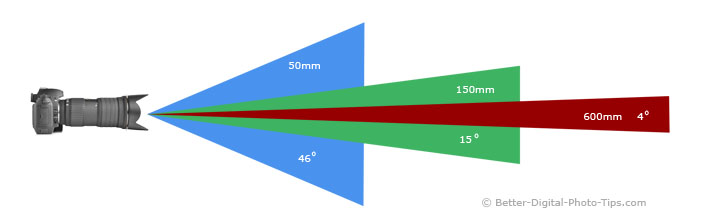 Blue shows a normal angle of view. The green area shows more of a telephoto lens setting
angle of view, and the red area shows a very narrow angle of view from a super telephoto lens.
A small angle of view means it's zoomed in to a narrower angle or telephoto and not as much of the scene in front of you is included in the photo.
APERTURE
The definition of aperture is the size of the opening inside the lens. It controls how much light strikes the camera's senor sensor. The numbers used are called f-stops.
A lower number such as f-2 or f-4 means the aperture of the lens is open more or larger. More on the definition of aperture.
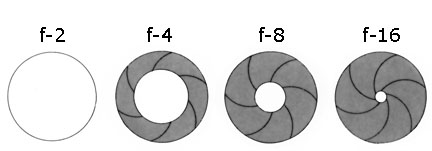
Changing the aperture will change the range of how much of your scene is in sharp focus. A large f-stop like f-11 is a small aperture and will give you more depth of field. A larger depth of field is a larger range of near to far things that are in focus in your photo.
To understand how changing the aperture can effect your photo exposure exposure, read this: Photo Exposure.
aPERTURE PRIORITY

A camera setting where you set the aperture (the f/stop number) and the camera will set the shutter speed automatically to give you the right exposure.
Popular with portrait shooters and landscape photographers who want control over the range of things that are in focus, the depth of field. Here's more on modes and camera settings.
ARTIFICIAL LIGHT
As a photography term, it mean any light on your subject that is not the sun or something illuminated by sunlight. Artificial light can be added to the existing natural light on purpose, as is with fill light.
This could be your camera's flash, a light bulb or other electrically generated light source.
ASPECT RATIO
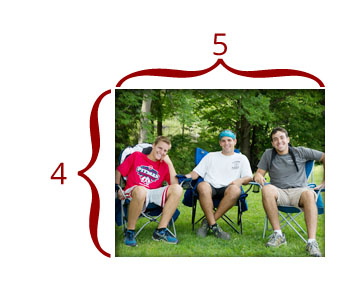
The proportions or ratio of a picture's width to it's height.
An 8x10 print has the same aspect ratio as a 16x20 print. The width compared to the height in both sizes are 4:5 ratio.
ARTIFACTS
Picture imperfections from an error when the camera processes the data or from a bad spot on your camera sensor. Sometimes it's only a single tiny pixel that won't be seen. Sometimes there can be hundreds or thousands of bad pixels, showing up in what's called aliasing or moiré patterns.
Digital camera technology has advanced so much recently that it's unlikely you'll ever have to worry about artifacts although shooting at very high ISO settings can sometimes give your photo artifacts too.

Did I miss any important digital photography definitions or any digital camera terms?
If you're looking for another definition that I didn't cover, please let me know. You can use this quick form here.
AUTO ISO
A great option, one that I foolishly didn't use until recently and now I love it. With this camera setting you can manually set the aperture and the shutter speed and your camera will choose the right ISO for the right exposure.
Here is a post on why you really should be setting your ISO on AUTO.
Digital Photography Definitions and Terminology Beginning With "B"
BACKING UP
Making copies (and saving in a 2nd location) of important computer files such as documents or your precious digital photographs. This protects you if the original files are lost or damaged.
BACKLIGHT
Photo term used to describe the situation when most of the light is coming from behind your subject. You are shooting towards the light, so your subject is lit from behind. A silhouette of a person with the bright sun setting behind them is an easy example to imagine.
BACKUP
It's simply a copy of your original photos to another location to prevent loss. You are taking a risk of losing your images if you don't have a backup system of some kind. Here is an article titled: Best Photo Backup System.
BALL HEAD
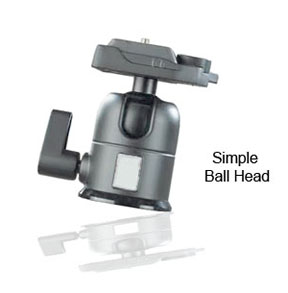
Tripod ball heads are extremely popular on monopods and tripods.
They are easy to loosen to adjust your camera on any of its axis.
Here is a comparison between camera ball heads and pan-tilt heads: Tripod Ball Heads.
BATTERY GRIP
A battery grip attaches to the bottom of a DSLR and carries two batteries to give you more shooting power. These grips usually have several camera controls to make shooting in a vertical "portrait" mode much easier. Here is more on the definition of a battery grip.
BENRO
Benro isn't a photography definition. Benro is a relatively new player on the long list of camera equipment manufactures.
A good part of this website covers many of the popular digital camera accessories that you can have fun with. Here is some information on Benro Monopods and Benro Tripods.
BOKEH

Bokeh means blur, but specifically it's an effect based on getting different shapes in the out of focus areas of a photograph.
Lenses that can open real wide (like f/2.8 or f/2.0) and lenses that have apertures with many blades give a very pleasing out of focus background.
More on What is Bokeh and the definition of Bokeh.
BOUNCE LIGHTING
A lighting method that involves aiming the main light sources so that it bounces or reflects off of a surface. The light is often bounced off a large white or light object. This could be a wall, ceiling or reflector. The light becomes "softer" because the light is scattered in multiple directions.
Bounced light doesn't have harsh shadows like a direct light source.
BPI
 Camera Geek
Photo Nerd!
No, it's not Bruce's Popularity Index.
BPI is the acronym for Basic Photography Information. It's what you will find on this web site along with advanced digital photo tips as well.
A good place to start is here: Basic Photography Information.
BUFFER
This is a temporary storage place for the data that your digital camera uses. This allows you to take several photos quickly without having to wait for the photos to be stored in the camera's permanent memory.
A large buffer allows you to shoot many photos while the camera is still processing and saving photos. For more on this go to: Camera Buffer.
BULB EXPOSURE - BULB MODE
A manual setting where you control the shutter speed by how long you hold the shutter button. Bulb exposure comes in hand for shooting fireworks, nighttime photography, and other creative situations.
Warning! There are some very important things you need to know before you use a Bulb Exposure setting on your camera.
Digital Photography Terminology - C -Digital Photography Definitions
CABLE RELEASE
An accessory which allows you to trip your camera's shutter release without touching it. This helps to prevent camera shake and means you can take pictures with long exposures and not get Blurry Pictures.
CAMERA MONOPODS
There are differences in the way monopods are made. Some are for videographers. Some are for hikers. What is different about Camera Monopods and which one is right for you?
Chromatic Aberration
This lens shortcoming is best described as color fringing. Chromatic aberrations show up in high contrast areas of your photograph, depending on several variables. Learn how to avoid and fix this negative effect image quality. Fix Chromatic Aberrations.
COLOR CAST
The effect of one color dominating the look of an image. Often caused by incorrect settings of a digital camera's white balance for the lighting.
CCD
Charge Coupled Device. One of the two main types of image sensors used in digital cameras. Digital Camera Choice - CCD vs CMOS.
COLOR TEMPERATURE
Color temperature is a characteristic of visible light. In photography it often refers to a warm color or a cool color. For a detailed explanation go to What is Color Temperature.
CMOS
Complementary Metal-Oxide Semiconductor. One of the two main types of image sensors used in digital cameras. Digital Camera Choice-CCD vs CMOS
COMPACT FLASH CARD
 Compact Flash
A common type of digital camera memory card, abbreviated as CF.
There are two types of CF cards, Type 1 and type 11, that vary in their thickness. They are about 1.7 inch x 1.4 inches
 SD Card
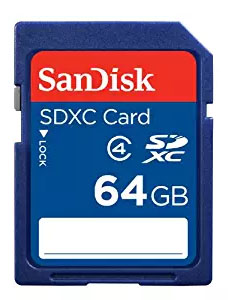
SD cards are much smaller, about the size of a common postage stamp. They come in several different versions.
SDHC (Secure Digital High Capacity)
SDXC (Secure Digital ‘Xtra Capacity)
COMPRESSION
Reducing the file size of digital data files by removing redundant or non-critical information within a digital image. This makes the size of your digital image file smaller and easier to store.
The large majority of photos are saved in a format called as JPG, which is a compressed file. File formats that are not compressed are TIFF, PSD, and DNG.
CONTRAST
The difference between the darkest and lightest areas in a photograph.
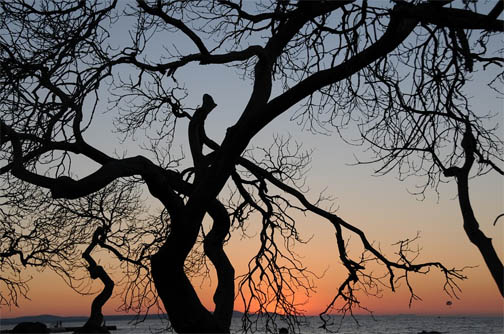 High contrast photo of tree and sunset
This silhouetted tree at sunset is a high contrast photo. This side of the tree is getting no light and the sky is much brighter.
CROPPING
Using only part of the picture area by framing a smaller area and cutting out the area outside the frame to improve the composition. Cropping usually refers to using software afterwards to re-frame. You can preferably use your camera's zoom lens to come in close to isolate your subject.
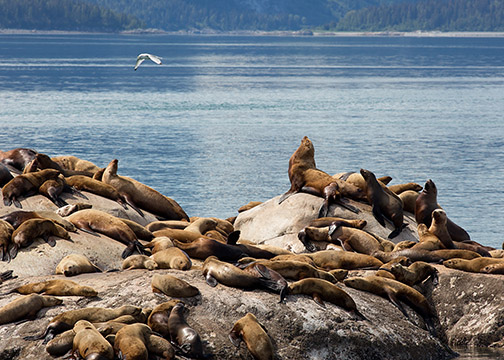 Un-cropped photo of sea lions
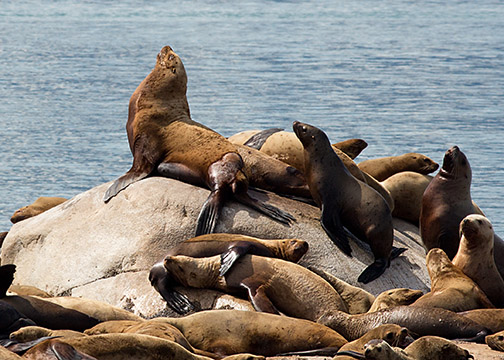 Cropped photo of sea lions
The original photo on the left was cropped "tighter" to emphasize the sea lion that was barking and eliminate some of the distractions the foreground.
CROP FACTOR
It is also commonly referred to as a focal length multiplier. It's a number used to compare lens focal length in relationship to the size of a sensor.
For a more detailed photography definition and an illustration go to this article titled Crop Factor.
D- Photography Definitions - digital photography terminology
DEDICATED FLASH
Attached or separated electronic flash that sends and receives information with the camera to ensure proper camera and flash settings to get the right exposure. The camera and flash use information about camera settings like ISO, shutter speed, subject distance, and aperture to determine the best flash output.
DEPTH OF FIELD (abbreviated as DOF)
The distance between the closest and farthest points that appear in acceptably sharp focus in a photograph. This is one of the most important digital photography terms to understand.
It can affect every single picture you will ever take. The DOF varies with the lens aperture, focal length and distance to subject. Read this article on What is Depth of Field.
DSLR (D-SLR) CAMERA
DSLR - is an abbreviation for Digital Single Lens Reflex camera. A camera that allows the scene to be viewed through the lens EXACTLY as the photo will be taken. DSLR cameras are bigger and heavier than point and shoot cameras and mirrorless cameras. How much do DSLR cameras weigh?
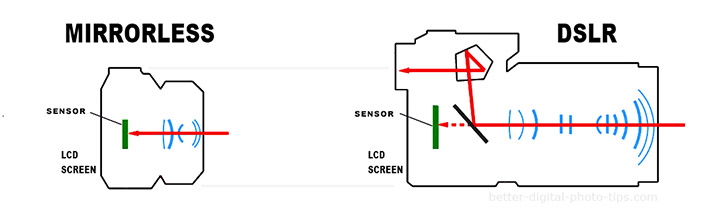
DSLR cameras use a mirror to reflect the camera's view through the lens to the viewfinder That mirror temporarily flips up quickly, out of the way, when the photo is taken.
More on camera types at Camera Instructions
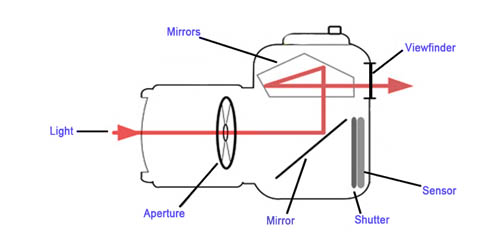 DSLR camera diagram
DIAGONAL
Anything that is not straight up and down or straight side to side is considered a diagonal.
Diagonals are often used in photography compositions to create more visually interesting photographs.
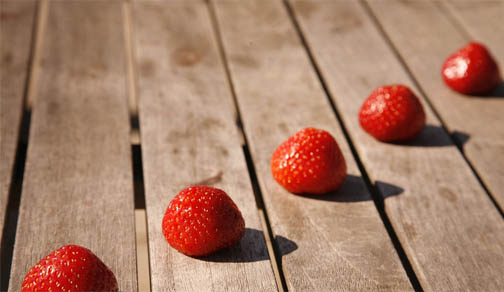 Diagonal Composition of Strawberries
Here are a few example photos comparing photographs of some fences where diagonals were AND were not used.
DIGITAL ZOOM
A zoom-like effect enlarging the central portion of a scene and cropping away what you don;t want in the photo. Not my favorite feature at all!
It's often needed and used with cell phone phones that can't zoom optically (with a lens). You waste the use of the full size of your sensor. Optical Zoom is a much better feature to have.
DPI - DOTS PER INCH
The number of dots of ink per inch when a photo is printed is DPI. Often confused-it's NOT the number of dots per inch on a tv screen or computer monitor. That's PPI or Pixels Per Inch.
DOWNLOADING
Transferring files from a digital camera or other source such as a web site or server to a computer.
When you're downloading from your camera to your computer you can either tether directly with a USB cord or you can remove your memory card and plug it directly into your computer with a memory card reader.
E- Photography Definitions - digital photography terminology
EXPOSURE
The total amount of light allowed to fall on a digital camera's sensor during the process of taking a photograph.

It is a product of how much time (the-shutter-speed) the shutter is open, how wide of an opening (the-aperture) and how sensitive (the-ISO-setting) the sensor is. Advanced point-n-shoot and DSLR camera let you decide on some or all of these three factors.
EXTERNAL FLASH
An accessory flash unit that is attached as an add-on on top of the camera or completely separate from the camera. It is not an internal flash which is called "built-in" flash.
EXISTING LIGHT
The light that is naturally illuminating a scene without any additional light that has been added by the photographer. Ambient light and available light are two other photography terms that have the same meaning as existing light.
F- Photography Definitions - digital photography terminology
FAST LENS
A fast lens is a lens that has a large maximum aperture. Here is an article on camera lens basics and fast lenses and why you might want one: All about Fast Lenses.
FILL FLASH
A flash technique used to brighten deep shadow areas even though there may be enough light for a proper exposure according to your camera's built-in exposure meter.
Ideal for portraits. Manually turning on your camera's flash or using a separate, remote or external flash will fill in the darker shadow areas caused when the lighting is coming from behind or from a sharp side angle. More on Fill Flash Photography
Fill flash is also useful if your background is very bright and you want to match the brightness of your subject.
Did I miss any important digital photography definitions or any digital camera terms? If you're looking for another definition that I didn't cover, please let me know. You can use this quick form here.
FLASH MEMORY
The technology used by memory cards. A kind of solid-state memory that is electrically changeable and retains those changes even in the absence of electricity.
Your photos are saved even after the camera or other device is turned off.
FLUID HEAD
What is a fluid head used for? It's an accessory that goes on the top of a monopod or tripod that uses a long handle for smooth movements of your camera.
Important when shooting video. Read more about Fluid Heads.
FOCAL LENGTH
What is focal length ? The technical definition: the distance between the near nodal point of the lens and the film plane when the lens is focused on infinity. Click here for a detailed explanation of Focal Length. Click here for a focal length-Camera Lens Comparison.
FPS - FRAMES PER SECOND
Frames per second is the number of pictures taken within a one second interval. Cameras with high FPS capabilities are great for Sports Photography.
When shooting video, the most common frame rates in video are 24, 25 and 30 frames per second.
Faster frame rates make for higher quality video, particularly with fast moving subjects in a video.
F-STOP
F-stop is a number related to the size of the lens opening (related to aperture). It's actually the ratio of the lens focal length divided by the diameter of the lens opening of the lens.
The larger f-stop number, such as f/11 means a small lens aperture. Here is a more detailed discussion of the definition of f stop and links to related articles.
FULL FRAME SENSOR
means that the camera's senor is the same size as 35mm film. For some information on the advantages and disadvantages of a camera with a full frame sensor, read this: Full Frame Sensor.
G- Photography Definitions - digital photography terminology
GOBO
Slang. A light blocking device that got its name because it GOesBetween the subject and the light source. I used this term quite a bit in photography school when we did many studio lighting set-ups with large studio lights.
GALLERY
There are many definitions of the word gallery, but on this photography definitions page, we are interested in a photo gallery as a collection or assortment of photographs. Studying family portraits taken by other photographers can improve your portrait taking skills.
GIMBAL HEAD
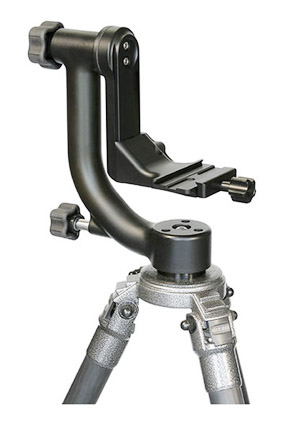
What is a gimbal head? A gimbal head is a device for use on a monopod or tripod.
It supports and precisely balances the weight of your camera and a long heavy lens so that you can make easy adjustments, left-right or up-down to photograph your subject.
The Lily Camera uses a digital gimbal to accurately follow a moving target.
H - photography definitions terminology
HDR
In photography, what is definition of HDR? A photographic technique used where several shots are taken of the same scene at different exposures.
Highlights from the underexposed photos and shadows from the overexposed photos are combined together to create a new picture.
HIGH KEY
An image that is mainly made up of light tones, which relatively few mid-tones or shadows. A picture of a polar bear playing in the snow is a good example of a high key photograph.
HISTOGRAM
A graph showing the brightness range of an image. Histograms can be used to make a better judgment if you have a good exposure for your picture.
Full-featured digital cameras and some computer programs can display these graphs. Histograms plot brightness along one axis of the graph and how many pixels at that brightness level along the other axis of the histogram graph.
For more details on how it can help you, click on What is a Histogram.
Digital Photography Definitions That Begin With the Letter I
INTERVALOMETER
An intervalometer is usually a separate accessory, but can be built into the firmware feature of some cameras. It operates the shutter a set intervals over a period of time to create time lapse photography.
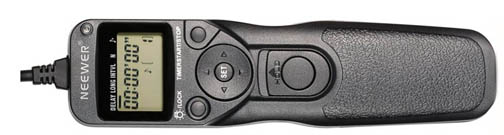 Intervalometer-Shutter Cord
Using a traditional digital camera, it's fairly simple to turn sequential still images into fascinating timed videos. Intervalometers have several other features for additional creative photography techniques.
ISO
The ISO refers to how sensitive the digital camera sensor is. A high ISO number means the sensor is more sensitive to light. In other words, it needs less light to get the right exposure.
This will allow you to take a picture in a darker situation or you can use a faster shutter speed or a smaller aperture and still get a good photo exposure.
J- Photography Definitions - digital photography terminology
jPG
The standard format of digital photography files. JPG is the file extension so a regular image file is named like: thisyourphotoname.jpg.
JPG actually stands for Joint Photographic Expert Group, the folks who came up with the standard. JPEG was shortened to JPG so that the extension only has 3 letters.
K -Definitions
KEY LIGHT
Also called "main light." The principal source of light on a subject or a scene. The key light is often the brightest light on the subject, or the one that will have the greatest overall effect on the image.
KICKER LIGHT
A kicker light is a light the "kicks" in a little more light to a small area of the subject such as a hair light or edge light to create a highlight or more separation from the background.
KIT LENS
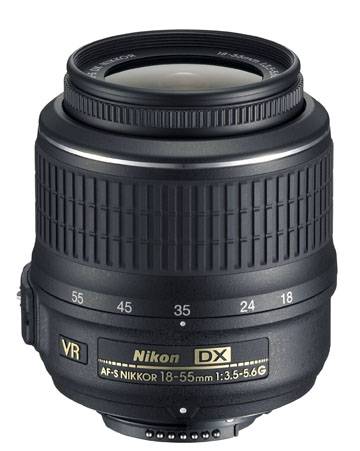 18-55mm Kit Lens
A kit lens is a general all-purpose lens that comes as a starter with a camera body. Usually camera retailers include a basic zoom lens with the camera body.
Find out the advantages and disadvantages of using a kit lens here.
L- Photography Definitions - digital photography terminology
LATITUDE
The range of dark areas to light areas that can be recorded or perceived. Our human eyes have a much, much larger range of latitude than digital camera sensors.
LIGHT RATIO
A lighting ratio is the ratio between the main light (also known as the key light) and the fill light. Lighting ratios are used primarily in portrait photography. A light ratio of 2:1 means that the main light is providing twice as much light on the subject as the fill light. For more on this topic click on Light Ratio.
M Definitions Used in Digital Photography
MACRO PHOTOGRAPHY
Close up photography of a subject where the image is recorded on the sensor at the same size or larger than actual subject. If you have an interest in macro photography, find out more about it in this related article: Macro Photography. or an entire page on the Definition of Macro Photography.
For information on macro photography equipment and technique, go to Macro Photography Equipment and Macro Photography Technique.
MB - MEGABYTE
A megabyte of memory is about 1 million bytes of information. This is the same as 1,000 kilobytes (K) A photograph that is several MB (megabytes) is a higher quality and is suitable for printing.
Usually when photos are used for emailing or for web site use, they are smaller and we talk about their size in kilobytes(KB)
MEGAPIXEL
This digital camera term means one million (1,000,000) pixels. Camera manufacturers describe the size of a digital camera's sensor in megapixels and abbreviate the term as "MP".
An 8 MP camera has a sensor that has about 8 million pixels. Caution: sensor size is not the only thing to look at when comparing digital cameras.
Mirrorless
Unlike a Digital Single Lens Reflex (DSLR), there is no mirror that reflects the light through a prism in order for you to compose your photo. With a mirrorless camera, you can to see your composition on the camera's LCD screen or by looking at an electronic viewfinder (EVF).
MONOPOD
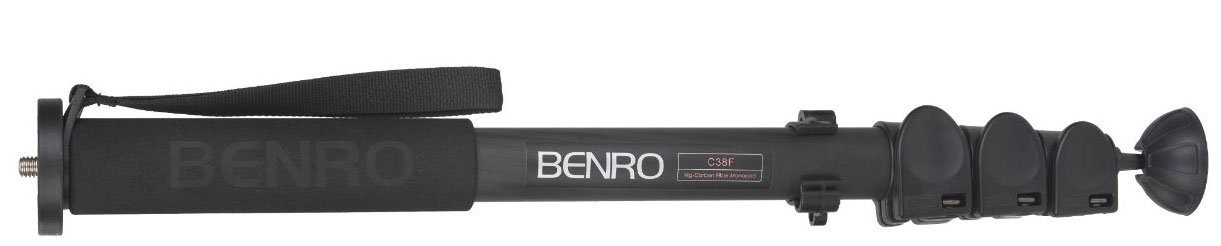 Benro c38f monopod
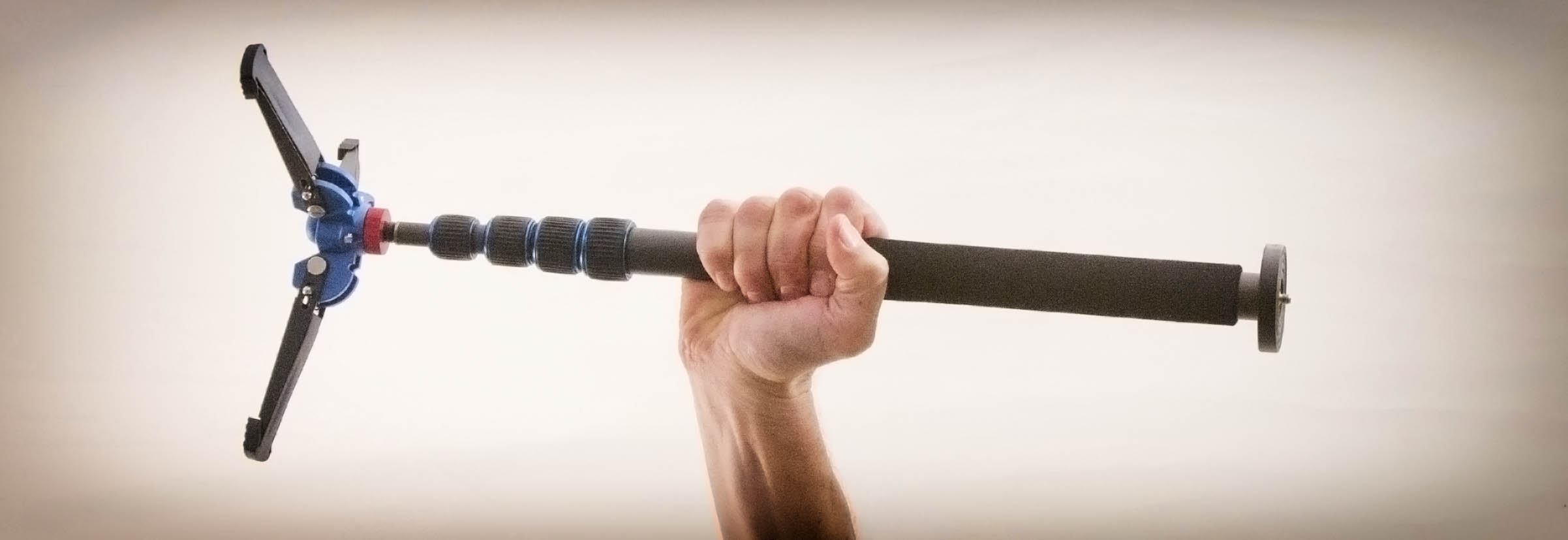
Sometimes referred to as a unipod, "mono" means one and pod means "leg." A one legged support for your camera. Read up on Monopod Reviews or How to Use a Monopod or read more on the definition of monopod here: Definition of monopod.
MONOPOD HEAD
Monopod Heads are the attachments on the top of the monopod that make it versatile and adjustable to different angles. Attaching your camera directly to a monopod without a head will give you the needed stability but you are restricted with the angles you can shoot.
Ball heads are by far the most popular heads used with the pistol-grip version of ball heads being the most versatile and fastest to adjust.
N- Photography Definitions - digital photography terminology
NATURE PHOTOGRAPHY
My favorite kind of photography, followed by portrait photography. You likely don't need a definition on this photography term. I included it here for you so that you know it's such a great type of photography for you to enjoy
For tips on taking nature photography go to Nature Photography Tips. For some excellent examples of nature photography, I made a small gallery of pictures of nature. Want to have a look? Pictures of Nature
NEUTRAL DENSITY FILTER
A filter you can use to cut down the amount of light that reaches your sensor. This gives you the ability to open up your aperture or lengthen your shutter speed for creative purposes. More on this topic here.
NIGHT TIME PHOTOGRAPHY
Okay, no definition needed here either, but I wanted to include this term on the photography definitions page so you could find this article on Night Time Photography Tips.
NOISE - DIGITAL NOISE
Digital noise has to do with the "grainy" look you find in a digital image. It is more apparent in underexposed images or in the shadows where the pixels on the digital camera sensor did not get enough exposure.
A noisy photo can have speckles or artifacts and often lack sharpness.
O- Photography Definitions - digital photography terminology
OPEN SHADE
The definition of open shade is shade that is in the shadows of large buildings, under big trees or other area that still allows a large light source to illuminate your subject. Benefits of open shade: No harsh highlights from the sun, no squinting, and an even light source.
OPTICAL ZOOM
The different photography definitions of optical zoom vs. digital zoom are important to understand. With optical zoom, you are using the lens to come closer or to include more in your pictures. So, you still are using all of your camera's sensor to record your image.
This gives you the best quality. Digital zoom means you are literally not using part of your sensor to make it appear as if you are moving closer to your subject. You can always do cropping later when you are doing your photo editing.
OVER EXPOSURE
When a picture is overexposed, the sensor received too much light during exposure. Sometimes a little over exposure is okay. If the overexposure is too great, details in the highlight areas of the photograph are lost forever.
Many professional photographers (ME too) like to shoot in "raw" mode, because the exposure can be adjusted, even after the photo has been taken.
Over exposure often happens when most of a subject is dark, but there are very bright areas in your scene as well. This is the biggest photo mistake when photographing the moon. How to Photograph the Moon.
P- Photography Definitions - digital photography terminology
PANCAKE LENS
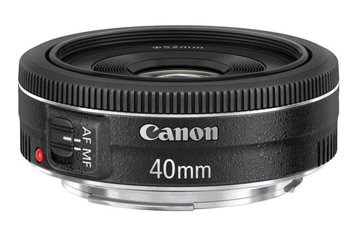
A pancake lens is a short lens, a non-zooming prime lens that is designed to save space and weight when attached to a camera.
Here is an article defining the term and the advantages and disadvantages of using one: What is a pancake lens?
PANNING
Technique that involves taking a picture while moving the camera at a relatively slow shutter speed. It is almost always used when tracking a moving object.
When properly carried out, the object is rendered relatively sharply while its surroundings are blurred. Here is a great example of panning.
pHOTETHNOGRAPHY
Photoethnography is the art and science of representing other cultures visually. There is a web site dedicated to this art, including a page on photoethnographers.
PIXEL
What is a pixel? "Pixel" is a contraction of the two words: picture element. On an LCD screen, what appears as a single white dot actually consists of three pixels: one red, one green and one blue. White light is actually equal blending of the three colors together.
With most camera sensors, there are actually two, very tiny green light collectors combined with a tiny red and a tiny blue light collector. The camera processes the information gathered from these combined collectors and each pixel has a value for red, green and blue which make up it's actual color.
PLAMP
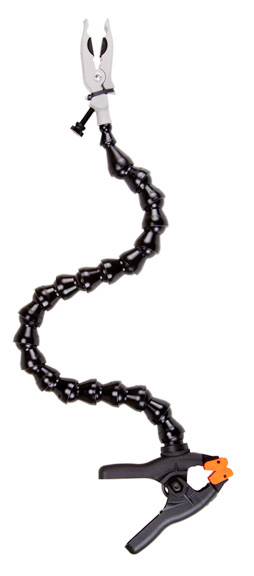
A Plamp is a photographer's clamp. You can twist them in various ways and they have ingenious clips on each end. Here's an article on Photographic and NON-photographic ways on how to use a Plamp.
I don't use mine a lot, but when I do it works great. This clever term is really the name of a handy accessory made by the Wimberley company. They are long and shaped like a snake.
There are also similar products called McClamps made by FM Photography. These are a very popular gadget used by macro photographers (and others) to hold various objects, useful to act as a third hand.
PORTRAIT
A pictorial representation of a person, usually showing the face. There are quite a few posts about Portrait Photography and posing on this website.
PRIME LENS
Not like prime beef where it has anything to do with quality. Today's common definition: A prime lens is simply a lens with only one focal length. In other words, it has no zoom feature. To find out WHY anyone would ever want to use a prime lens, read this: What is a Prime Lens?
Q Definitions
QUICKLY
The speed at which you can find what you're looking for by using the search box, here on the right
Search for a new topic on this site:
R- Photography Definitions - digital photography terminology
RAW
Also called camera raw or raw format. Shooting in "raw" mode allows the photographer to process the data later instead of having the camera process the data at the time the picture is taken.
It contains the most information possible from a camera's sensor. Saving the raw image allows us to process it any way we wish, making choices on color, sharpness, exposure and many other variable. Raw files are very large compared to the standard jpg format that all digital camera can shoot in.
DEFINITION OF RECIPROCAL RULE
Use the reciprocal rule to avoid the unsharpness caused by camera movement when you're not using a tripod or monopod. This rule is a guide to help you figure out what shutter speed is needed to get a sharp photo while hand-holding your camera.
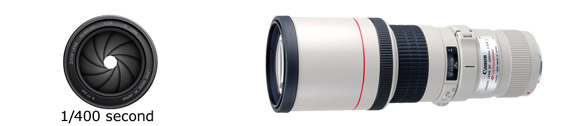 Using the reciprocal rule, a 400mm lens
would need a 1/400 second shutter speed.
Your minimum shutter speed should be the reciprocal of your lens length. If you're shooting with a 400mm lens, you should use 1/400th of a second for your shutter speed. This assumes you have a real steady hand and use good technique.
RED EYE REFLECTIONS
The Red Eye Reflections are caused by having the flash or other light source too close to the lens.
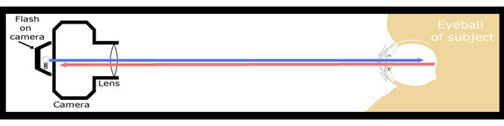
Here is a detailed article on how to stop red eye.
RGB
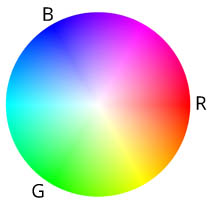
Red, Green and Blue.
The three colors which cover the range of wavelengths that we humans and digital camera sensors are sensitive to.
The red, green, and blue pixels are combined in various quantities to produce millions of different colors. CMYK are the colors that printers combine together to get all of the various colors.They are cyan, magenta, yellow, and black.
RULE OF THIRDS
This is one of the photography definitions that is searched for frequently and great to know and use. It's a great starting point for new photographers.
The photography rule of thirds is a way to improve your composition by dividing you photo in thirds with imaginary lines, both vertically and horizontally and placing the subject at the intersection of two of those lines.
For an explanation of what it is: Rule of Thirds.
For a easy way to use it in-camera: Rule of Thirds in Photography.
S- Photography Definitions - digital photography terminology
SATURATION
The degree of hue in color as perceived subjectively. Saturated color can be termed strong, vivid, intense or deep. Desaturated color can be termed weak, pale, washed out or dull.
scrim
A very broad definition of a scrim in photography is a "light modifier." The most common use of a scrim is to cut back on the brightness of a light and diffuse it.
SELFIE
A self portrait. "Selfie" has been added to the Merriam-Webster dictionary and is defined as an image of oneself taken by oneself using a digital camera especially for posting on social media. Here's a whimsical look at selfie portrait craze.
I'll add that selfies can often include more than one person and that camera extenders, a version of monopods, are becoming a very hot accessory to by to help take better selfies. Also, you might be looking for the highest rated Selfie Monopod.
SHALLOW DEPTH OF FIELD
This is one of those photography definitions that has several ways to express it. "Shallow" or "Narrow" or "Short" depth of field all mean that the range of things in focus is small. For examples of shallow depth of field, go to Shallow Depth of Field Examples.
SHUTTER LAG
Using a digital camera, the delay that occurs between pressing the shutter release button and the actual moment the picture is taken.
SHUTTER SPEED
Simply the length of time that the camera allows the light to strike the sensor. It is usually given in fractions of a second such as 1/60 of a second or in seconds for very long exposures.
For more on beginning photography tips regarding Shutter Speed, click here: Beginning Photography Tips - Shutter Speed.
SHUTTER PRIORITY
An exposure mode (in a camera with automatic exposure control) that permits the photographer to preset shutter speed while the camera automatically determines the aperture setting required for proper exposure. See also the definition of aperture priority.
Did I miss any important digital photography definitions or any digital camera terms? If you're looking for another definition that I didn't cover, please let me know. You can use this quick form here.
t - photography definitions continued
THUMBNAIL
A small version of a photo. Image browsers commonly display thumbnails of photos several or even dozens at a time.
TRIPOD
A three-legged stand for supporting a camera or other apparatus. There is a huge range of sizes, quality, prices and uses for tripods. List of Tripod Articles. The origin of the definition of tripod, the types of specific tripods and tripod heads.
Tripods are more stable and heavier than one-legged supports called Monopods. Monopods have definite advantages in some instances and this fuels the monopod vs. tripod debate.
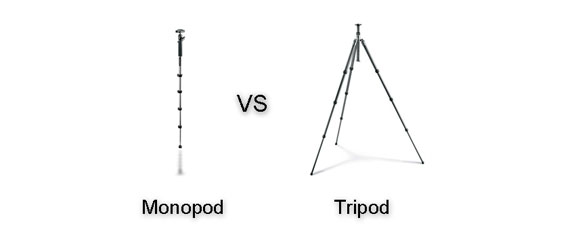
Another very important component with tripods that many photographers neglect to consider is what is the Best Tripod Head to use.
TTL
In photography terms TTL stands for "Through The Lens."
It is most commonly applies to electronic flash and exposure. TTL flash means the exposure is controlled by reading the actual amount of light reaching the camera sensor and adjusting the length of time the flash fires.
Exposure with flash was originally only manually controlled; then "automatic" flash control was done with a separate sensor on the flash unit. Now it has evolved to E-TTL and E-TTL II by Canon and I-TTL by Nikon.
TUTORIAL
A tutorial is one method of transferring knowledge. More visual and specific than a book or a lecture, a tutorial seeks to teach by example. A self-paced learning exercise; a lesson prepared so that a student can learn at their own speed, at their convenience.
This entire web site has been designed with specific examples and lessons to be used as your Digital Photography Free Tutorials source.
For instance, here is an illustrated tutorial for macro photography, specific for inside macro photography and for using a point and shoot camera Macro Photography Tutorial.
U - Photography Definitions - digital photography terminology
UNDER EXPOSURE
When the sensor does not receive enough light, the image is underexposed. It can be lightened, but image quality might suffer, depending on how underexposed your photo is. Digital Noise and un-sharpness can result when you brighten it. Here's how to avoid and fix underexposed photos.
USB
Universal Serial Bus: A standard type of connecting port for transferring information ( data, photos) between devices such as computers, digital cameras, printers and scanners. A USB device can be used as soon as it is connected, without having to reboot the computer.
V- Photography Definitions - digital photography terminology
VIGNETTING
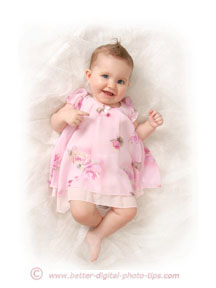
What is Vignetting?
It is the gradual darkening or lightening of your picture toward the edges.
Sometimes photographers create this effect on purpose. Darkening the edges will emphasize the area in the middle of your picture.
Vignetting can also be caused by a defect in the lens or a lens hood or something else blocking part of the lens when the photo is taken.
Definitions for words beginning With The Letter W
WHITE BALANCE
The camera adjusts the overall scene's color balance so that the areas meant to be reproduced as neutral or white in the picture will be accurate, thereby also adjusting all the other colors in the scene using the same color shift values.
X - Definitions
X SETTING
Shutter speed setting at which flash synchronization occurs. For some manual cameras, the X setting designates the maximum shutter speed at which the camera synchronizes with flash. X-SYNC - Same As “X Setting”
Y
YES
What you tell your friends if they want to know if the digital photography tips website has valuable information.
Z- Photography Definitions - digital photography terminology
ZOOM
The action of varying the focal length of a zoom lens to show more or less in the photo. You can zoom in to show less in the photo or zoom out to show more in the photo. Zooming in will bring the main subject closer.
See the photography definitions for optical zoom and digital zoom. It's important to know the difference between these two digital camera terms.
Here is another web site that has a page entitled Jargon Buster with more photography terminology: Digital Photography terms.
Understanding photography definitions and digital photography terminology can help you when you are reading about tips and techniques on taking better digital photos. Do you need to know other camera terms? Or would you like to share one of your own photography definitions ? Do it here.
Have a blast.

ABOUT BRUCE LOVELACE
Bruce is the publisher of this website. He is the author of the book "Improve Your Photography Instantly." Read more on Bruce on his Bio Page. He's been known as The Traveling Photographer ever since 1994. Read more about this website.
View some of Bruce's photos on Instagram. Visit the Facebook Page. Watch him on YouTube. Bruce runs photo workshops for kids and adults, and provides one-on-one photography coaching.
Digital Photography Education Location on Google My Business
did i miss any Digital Photography Definitions ?
This is an extensive list of digital photography definitions. If I've missed something or you think I need to add something please let me know using the form below.
Ask Me a Question
Do you have a question about digital photography? Ask me. If you want to include a photo for explanation or for critique, you can do that too.

Recent Articles


-
What is Auto ISO? Tips On When to use it and When Not to Use Auto ISO
Apr 24, 24 05:44 AM
 Auto ISO Simple Guide. Questions and answers on when to use AUTO ISO and when not to use it. How you can use it to improve your photography.
 -
Best Photo Backup System - Never Lose a Photo Again, Ultimate Guide
Apr 21, 24 01:45 PM
 You're at risk to lose your precious digital photos. What's the best photo backup system? Read on my firend
 -
What is Bokeh. Why It's So Important And How To Get The Best Bokeh
Apr 19, 24 02:12 PM
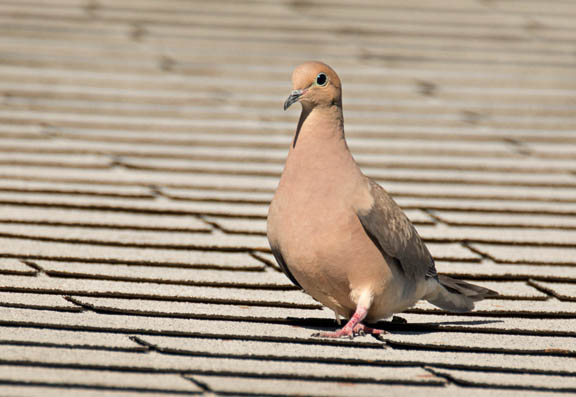 With multiple meanings and false definitions. Find out what is bokeh in photography. It's a simple way to improve your photos by controlling the out of focus areas of your subject. How to get the best…
 -
7 Reasons Your Camera Won't Focus And The Simple Ways to Fix It!
Apr 19, 24 01:41 PM
 That's annoying! You missed another important photo because your darn camera won't focus. 5 simple tips to fix or avoid missing that great shot.
 -
How to Take a Self Portrait With a DSLR or Mirrorless Camera
Mar 30, 24 02:27 PM
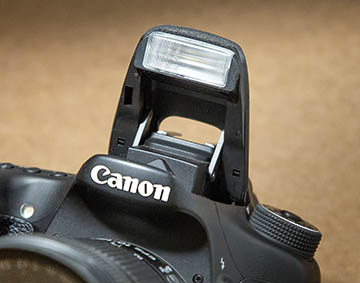 Selfie Superstar: Master the Art of the Self-Portrait. Simple steps on how to take a self portrait with a real camera, not just a smart phone selfie.
 -
5 Camera Extender Buying Tips How To Buy An Extender For Your Camera
Mar 30, 24 12:47 PM
 Extend Your Reach: The Secret Weapon of Pro Photographers (It's Not What You Think!) Beyond the Lens: How Camera Extender Poles Elevate Your Photography Game
 -
3 Digital Photo Editing Steps To Take in 2024 Before Anything Else
Mar 30, 24 09:56 AM
 Don't retouch your photos until you read this. Before you get bogged down with editing software, save time. Use these 3 digital photo editing tips first
 -
5 Basic Photo Editing Tips For Beginners. Make Your Photos 10X Better
Mar 28, 24 12:22 PM
 Easy ways to improve your pictures. These Top 5 photo editing tips for beginners are the ones to do first to turn your average photos into winning photos
Improve your photography instantly. Get the 2 most important chapters of my photography book for free.
Free Photography Videos: