HOW TO POSTS: LIGHTING AND COMPOSITION
nature photography composition tips
-Getting BALANCE in your nature photos
WRITTEN BY: BRUCE LOVELACE
UPDATED: February 4, 2024
You can improve your nature photography composition by starting with ugly subject! What? I know what you're thinking. Why would you want to photograph an unattractive nature subject.
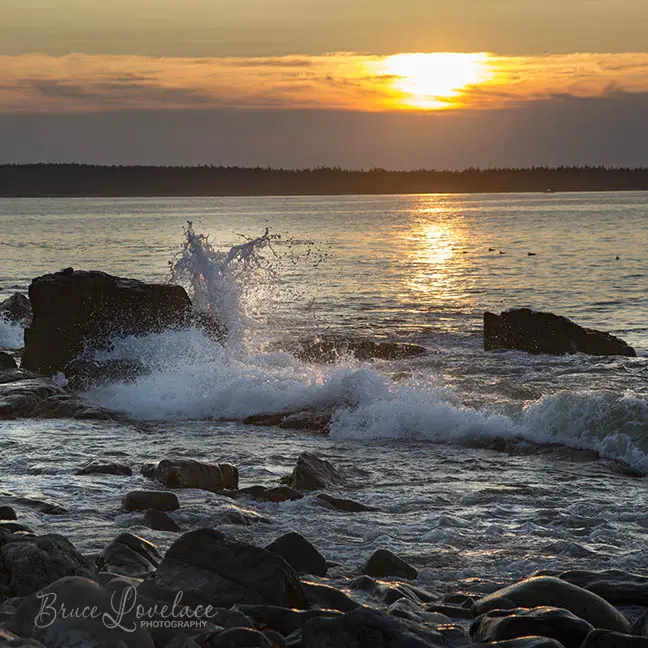
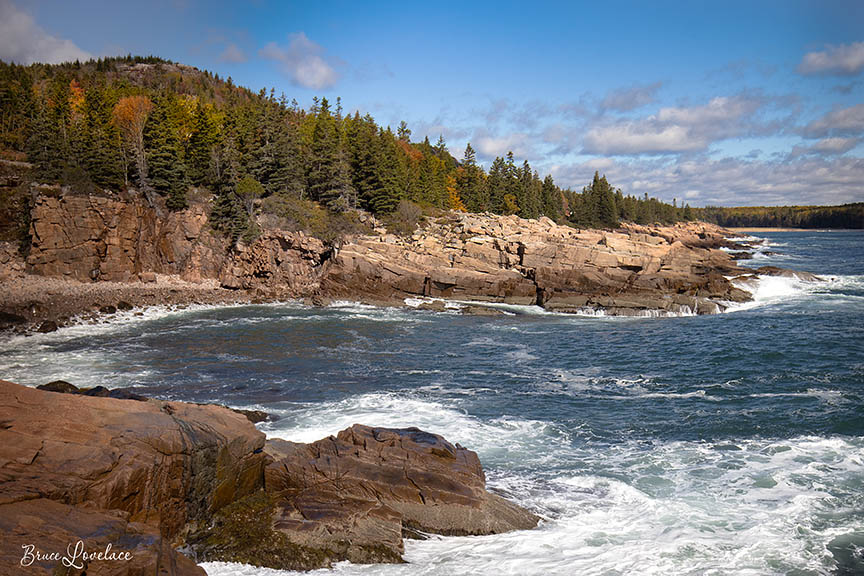
The photo above was taken during a weeklong photo excursion to coastal Maine. It's a photographer's paradise in terms of subject matter and it's easy to just start clicking away without putting a little thought into creating your image. I wanted to succeed at making a good square composition to use for a post on Instagram. I composed this image using several different slight variations and came up with this one as being balanced, while still including the sunrise, the ocean, the waves, and the rocks.
And now for the flipside. I included the unusual nature photo below in this article on nature photography for a reason. I am guessing that you would agree it's not what you'd call a great nature photograph. I agree.
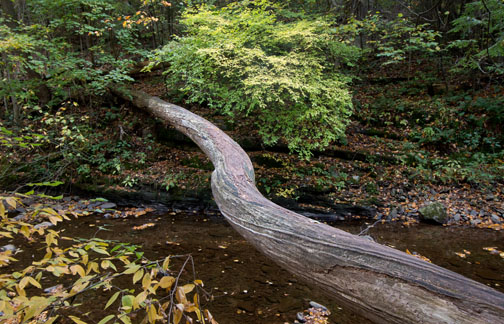
It's so common to see beautiful subjects used as examples in articles on photography composition. It's easy to be misled to thinking that finding great subjects is the only key to great photography.
Practice good technique in all the photographs you take. You can challenge yourself by photographing ordinary or unattractive objects in an interesting way.
use good nature photography composition with ugly subjects
Here's a similar subject with a curved shape that I attempted to photograph in an interesting way. Take a look at the composition I chose and try to ignore the subject matter itself. It's hard to do, but give it a try. Is it balanced? Does it use the rule of thirds or have any leading lines?
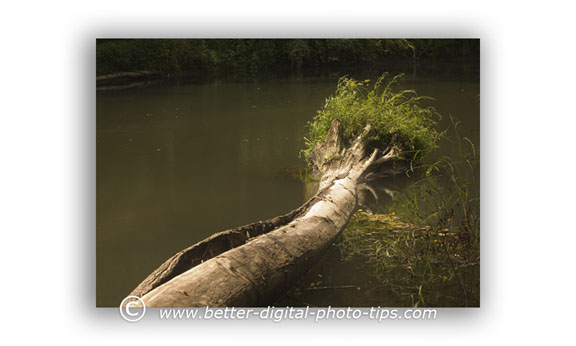 Photography unusual subjects to practice your composition.
Try using a few digital photography tips with not so beautiful subjects first. This practice will automatically make all of your photographs a bit better.
Let's look at this photo of the fallen log, taken at White Clay Creek State Park in the state of Delaware. Photography composition rules used:
- Diagonal line coming from an edge near a corner.
- A Leading Line toward the subject.
- Placement of center of interest using the Rule of Thirds
I'm not sure if this is an attractive nature photo or not. Being a Nature Nerd I was fascinated by two things about this log. The almost finger like root system at the bottom of this log surrounded by the grassy vegetation. It almost resembled a hand grabbing a wad of green steel wool.
Secondly, the split in the trunk was shaped as if purposefully done to transform itself into a canoe for floating down the White Clay Creek. So, we accomplished a good composition, even though the subject was perhaps not so usual.
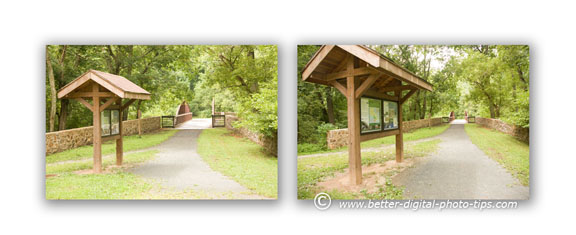
The two photos above of the information center on the Tri-Valley Trail in Delaware show the importance of choosing the right perspective. The photo on the left is composed better than the photo on the right. On the left I had a more distant perspective, which included the path of the nature Tri-Valley nature trail coming in from the right and curving toward the bridge in the distance.
On the right I was closer to the information board and used a very wide-angle lens setting. This made the bridge too small in the distance. It also made the information center too dominant in the photo and included less of the surrounding beautiful nature area.
When you are practicing your nature photography composition techniques, remember to try a few different perspectives to change what is emphasized in your photos.
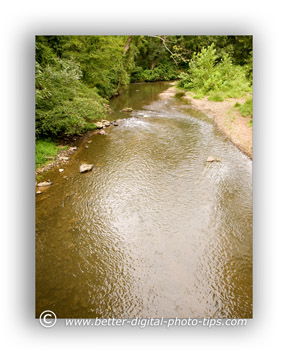
Using the right perspective includes picking the right camera format, vertical or horizontal.
In this view of the White Clay Creek from the Tri-Valley bridge, I captured the reflection of the sky in the water. This vertical format included a large area of water and the reflection of the white overcast sky.
This area of water and reflection dominates the photo and really isn't interesting enough to dedicate to 2/3 of the area in the photo.Look what happened when I turned my camera to a horizontal position and moved to the side of the bridge.
Not an award winner, but a whole lot better composition than the vertical.
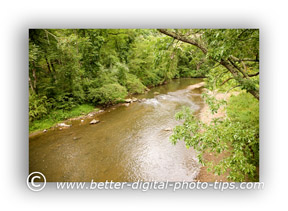
Now I have more balance between the water and the foliage. The rule of thirds in photography works here quite well.
Also, the diagonal, leading lines work much better here as well. Generally I don't consciously think about these nature photography composition tips as I shoot, because they've become second nature (no pun intended) to me.
Digital photography has given us the freedom to experiment with different perspectives, angles, and compositions with no worries of wasting film or processing and printing costs. So practice these tips on taking digital photography as often as you can and discover what works and what doesn't.
As you gain more experience in experimenting with different photography compositions, you'll discover when to follow and when to break some of the rules of composition. I just added these Fall foliage nature photographs below:
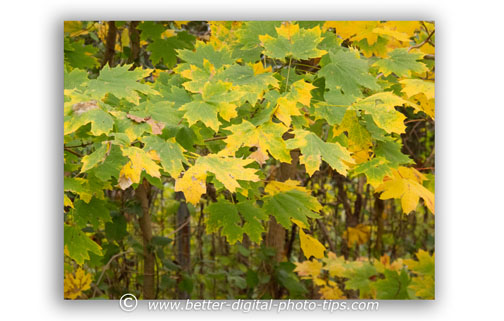
Occasionally you can also abandon composition rules and compose the photo based on a feeling of what looks good. Nature supplies us with an infinite source of color patterns, textures and shapes to shoot "outside the box" and not use specific photography composition techniques.
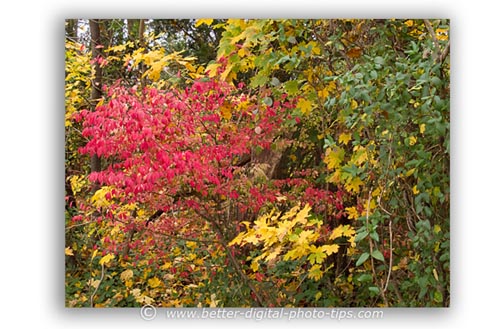
I am a nature geek and I enjoy photography of abstract color patterns. This nature photo of the intermingled red, yellow and green leaves does not really follow any composition rules like the rule of thirds or using diagonal lines.
I just enjoy the variety of natural bouquets that Mother Nature produces each fall here in the Northeast USA. I hope you enjoyed this article and picked least a few nature photography composition tips.
use SIMPLICITY in your nature COMPOSITIONS
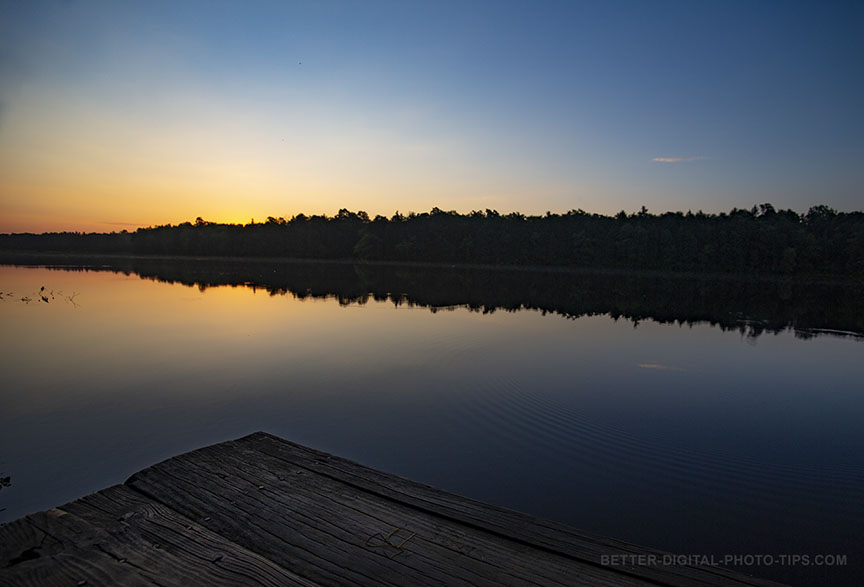
Try some compositions where your photo takes a minimalist approach and only includes a few elements. I planned this photo before traveling to this location. I used an ap on my phone called SunPositionMap which will show you the timing and direction of the sun for any location in the world on any given day.
free nature photography composition video
How'd you like to learn from a nature photography master of composition? Ian Plant is one of the photographers that I listed in my top 10 nature photographers post. He's one of my favorite mentors.
Here's an educational video where Ian shares some of the secrets of great composition in some of his spectacular images of the natural world. I'm sure you'll enjoy watching it-It's really helpful!
Hi hope you found this post on composing your nature photos both unique and helpful. See related topics below my signature.


ABOUT BRUCE LOVELACE
Bruce is the publisher of this website. He is the author of the book "Improve Your Photography Instantly." Read more on Bruce on his Bio Page. He's been known as The Traveling Photographer ever since 1994. Read more about this website.
View some of Bruce's photos on Instagram. Visit the Facebook Page. Watch him on YouTube. Bruce runs photo workshops for kids and adults, and provides one-on-one photography coaching.
Digital Photography Education Location on Google My Business
You might like these
Nature Photography And Multiple How To Resources About Nature Photos
There is a lot more to it than just finding the right spot. Use these nature photography tips to improve your photography
10 Famous Nature Photographers Who Will Inspire You And Teach You
The crazy reasons I started following these 10 talented photographers.Who are the famous nature photographers? The top 10 list and what you can learn from them.
How To Take Storm Photos by Embarking on a Storm Chasing Expedition
Collection of remarkable storm photos. Will it be enough to entice you to try a storm chasing expedition and shoot your own breathtaking storm photography
Photos of the Loyalsock Trail-Elevation Map and Helpful Information
Not a dedicated photography excursion, but you'll like these photos of the Loyalsock Trail. Loyalsock Trail facts. Video of Loyalsock waterfall photography
Nature Prints For Sale by Bruce Lovelace. These are Free
If you are looking for nature prints for sale, I can create customized inspirational photos with any message you want

Recent Articles


-
1 Super Simple Macro Lighting Technique That Works Remarkably Well
Jun 14, 25 10:11 AM
 Macro photography lighting can be done with flash or continuous lights, but here is a super simple macro lighting technique you can copy using natural light.
 -
Are You Using Your Selfie Pole for Narcissism or Creative Growth?
Jun 14, 25 09:27 AM
 You're thinking about a selfie pole, but are selfies a sign of narcissism? Are selfie sticks evil or do they help improve our lives? A fascinating issue.
 -
Best Self Portrait Monopod. 3-Step Method on How To Choose The Best
Jun 14, 25 08:54 AM
 Beyond Arm's Length: Finding Your Perfect Selfie Stick. Selfie photos are in. But which pole makes the best self portrait monopod. Reviews of selfie monopods
 -
10 Simple Creative Photography Techniques to Play With Using A Camera
Apr 10, 25 04:36 PM
 Be creative with your photography. Use this remarkable list of 10 creative photography techniques. Great photo projects for beginners.
 -
What Is a Selfie. Definition and Guide to Improving Your Selfie Photos
Apr 02, 25 02:25 PM
 Selfies have exploded on social networks and permeated throughout our society, the self portrait. But exactly what is a selfie and How do you take a good one?
Improve your photography instantly. Get the 2 most important chapters of my photography book for free.