HOW TO POSTS: LIGHTING AND COMPOSITION
why use a full frame sensor camera
This article on full frame sensors is going to focus on the pluses and minuses of choosing a camera with a full sized sensor. The definition of a full size camera sensor is simple. It's the same size as a 35mm camera film size-precisely it's 36mm wide by 24mm tall. That's about 1 3/8 inches wide by 1 inch tall. Before digital photography arrived, all SLRs were 35mm film.
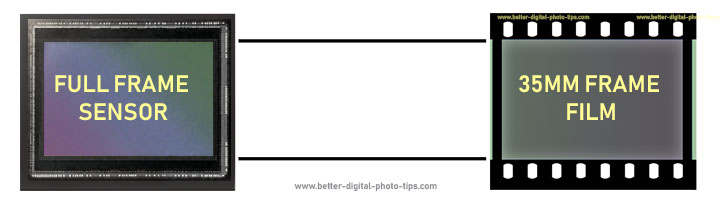 A full frame camera sensor is almost exactly the same size as a 35mm film frame
That's about 1 3/8 inches wide by just under an inch tall.
Now, with DSLR (digital-single-lens-reflex) cameras you have two main choices many options for sensor size. You can choose either get a full frame or a crop sensor. That has created a big debate about full frame sensor vs. crop sensors on photography blogs everywhere.
I use and own cameras with both. I have full and cropped sensor DSLRs and I like them both for different reasons. You can take amazing photos with either type. You don't have to fret over it, but it will be useful to understand the difference between the two.
full frame sensor vs. crop sensor
Full frame sensors are particularly good for landscape and architectural photography where small details are very important. You get great image quality and you also get the full view with wide-angle lenses.
Smaller, "crop cameras" with smaller sensors are smaller, lighter and more affordable. Crop cameras can use smaller, more affordable lenses.
With any given lens the field of view is narrower with the lens mounted on a crop camera versus a full frame camera. What does that mean for you?
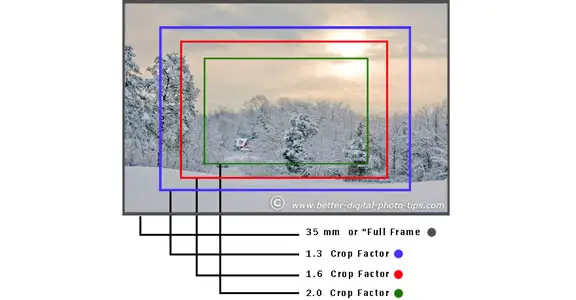
A full frame lens, like a 24-105mm lens, will "act" like a 38-168mm lens when it's mounted on a crop sensor camera. It give you a narrower angle of view. Compare the entire framed in area (full frame) with the white framed in area (1.6x crop sensor) in the crop comparison photo below.
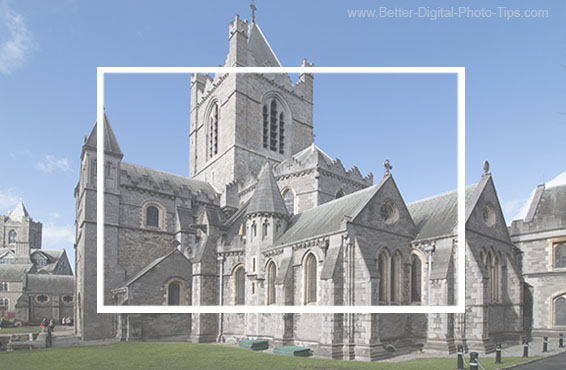
Here's a side by side comparison-see photo comparison below. Using the same exact lens and lens setting on a crop sensor camera will give you a "zoomed in" or appearance of a magnified photo compared to the same lens and setting on a full frame camera.
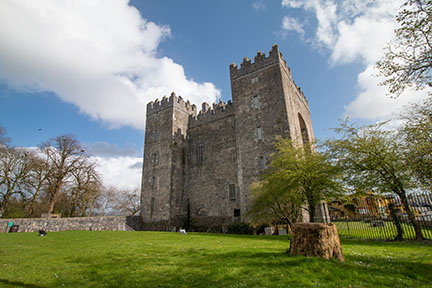 Lens Set at 17mm
on Full Frame Sensor Camera
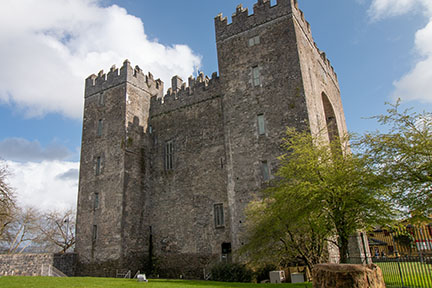 Same 17mm Lens
On a Crop Sensor Camera
You actually see less of the scene in front of you because the sensor is physically smaller and can't cover as much area. It's the same lens. Full sized lenses CAN work on crop cameras, but crop lenses CANNOT work on full frame cameras.
what are the advantages and disadvantages of using a full frame sensor
why are full frame camera sensors better
- Image quality goes way up with full frame sensors.
- You can get great bokeh with large sensors. You can purposefully achieve more blur in your background or shallower depth of field. That's desirable when shooting portraits.
- Large sensors have much less "digital noise" in low light situations.
disadvantages of full frame sensors
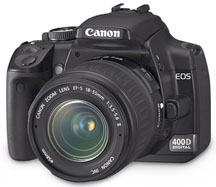
- One of the disadvantages of this larger size is that your lens and camera must be bigger too. This means heavier and more expensive camera body and lenses.
- Larger sensors are more expensive to make and therefore are more expensive to buy.
- Larger sensors give you larger digital files that take longer to process and require more memory, (although memory is very cheap now).
- When you want a deep depth of field, you have to close down the aperture quite a bit.
sensor size comparison
For a given number of pixels, the larger sensor allows for larger pixels that provide wider dynamic range and lower noise. Essentially that means a large size will give you a better quality on several fronts.
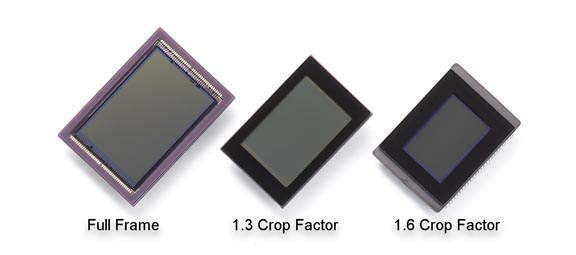
One of the photography terms that is associated with sensor is crop factor. A 1.6 crop factor is the most common crop sensor and is sometimes called APS-C. Nikon crop senators have a 1.5 crop factor and they're called DX.
If a sensor is full-size the focal length of a lens is the same as the lens would be on a 35mm camera. As you can see from the chart below, if your lens was a 105mm lens and you had a camera with an undersized sensor that has a crop factor of 1.6, then essentially that same lens will be like having a 168mm lens.
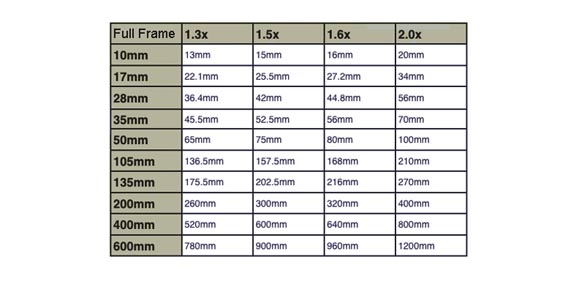
Smaller sized sensors have a perceived advantage for telephoto photography because the smaller angle of view of small-sensor DSLRs seemingly magnifies the telephoto effect of the lenses.
For a more detailed explanation of Crop Factor and an illustration of it, read this article: Crop Factor. Here are the four sensor sizes and the resulting "square mm areas:
Four Thirds sensor is 17.3 mm x 13mm = 224.9
APS-C = 23.5mm x 15.7mm = 368.95
APS-H = 28.1mm x 18.7mm = 525.47
Full-Frame = 36 x 24 = 864
You can see by the areas that a full frame sensor is more than 3 times as big as a Four-Thirds sensor and more than twice as big as an APS-C sensor.
Another important impact of different sensor sizes is the impact on depth of field. Cell phone cameras and small point and shoot cameras with smaller-sized sensors have a very large Depth of Field. Full-sized sensors have less depth of field which is great for portrait photography.
final thoughts on full sized SENSOR
Why is a sensor with a full frame better? The simple answer is you'll get better image quality. Generally speaking, with larger pixels on a larger sensor you'll get better dynamic range and less digital noise in low light situations.
That's really why we invest in high quality camera gear. Whether you're a novice or a photo enthusiast, you want the best quality in your photography. If you have the financial resources for the larger cameras and lenses, you'll fall in love with the beautiful results you'll get.
The best way to improve your photography is to keep on pressing that shutter button. Have a blast!


ABOUT BRUCE LOVELACE
Bruce is the publisher of this website. He is the author of the book "Improve Your Photography Instantly." Read more on Bruce on his Bio Page. He's been known as The Traveling Photographer ever since 1994. Read more about this website.
View some of Bruce's photos on Instagram. Visit the Facebook Page. Watch him on YouTube. Bruce runs photo workshops for kids and adults, and provides one-on-one photography coaching.
Digital Photography Education Location on Google My Business
You might like these
What Is a Pixel in Photography. What Really Matters Most About Pixels.
Understanding what is a pixel is easy after you read this. What's more important than the definition of pixel is how many you need
What is APS-C Camera Format. The Advantages and Disadvantages of APS-C
What does APS-C mean and the surprising reasons pro photographers use the APS-C camera format. Helpful guide to the pluses and minuses of a smaller sensor format
What is Crop Factor. Simple Guide And Why it Matters With Your Camera
Why are crop factor and sensor size so important? Simple guide to understand how crop sensor cameras affect your photographs.
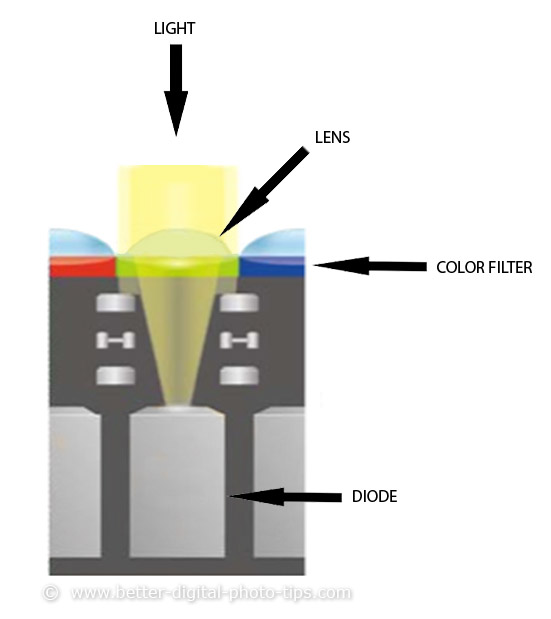
Full Frame sensor cleaning kits
There's nothing more annoying than having the same dust spot appear on every one of your photos. I've noticed a lot of searches for full frame sensor cleaning kits coming up.
Having your sensor cleaned by a professional is the safest way to go, but that can run you several hundred dollars depending on who you use and the extent of any other maintenance you;re having done to your camera.
If you're a do-it-yourselfer there are some highly rated kits available. Use the exact procedure recommended, use caution, and go slowly and you can clean your DSLR sensor without damaging it.
RELATED:
Improve your photography instantly. Get the 2 most important chapters of my photography book for free.


